


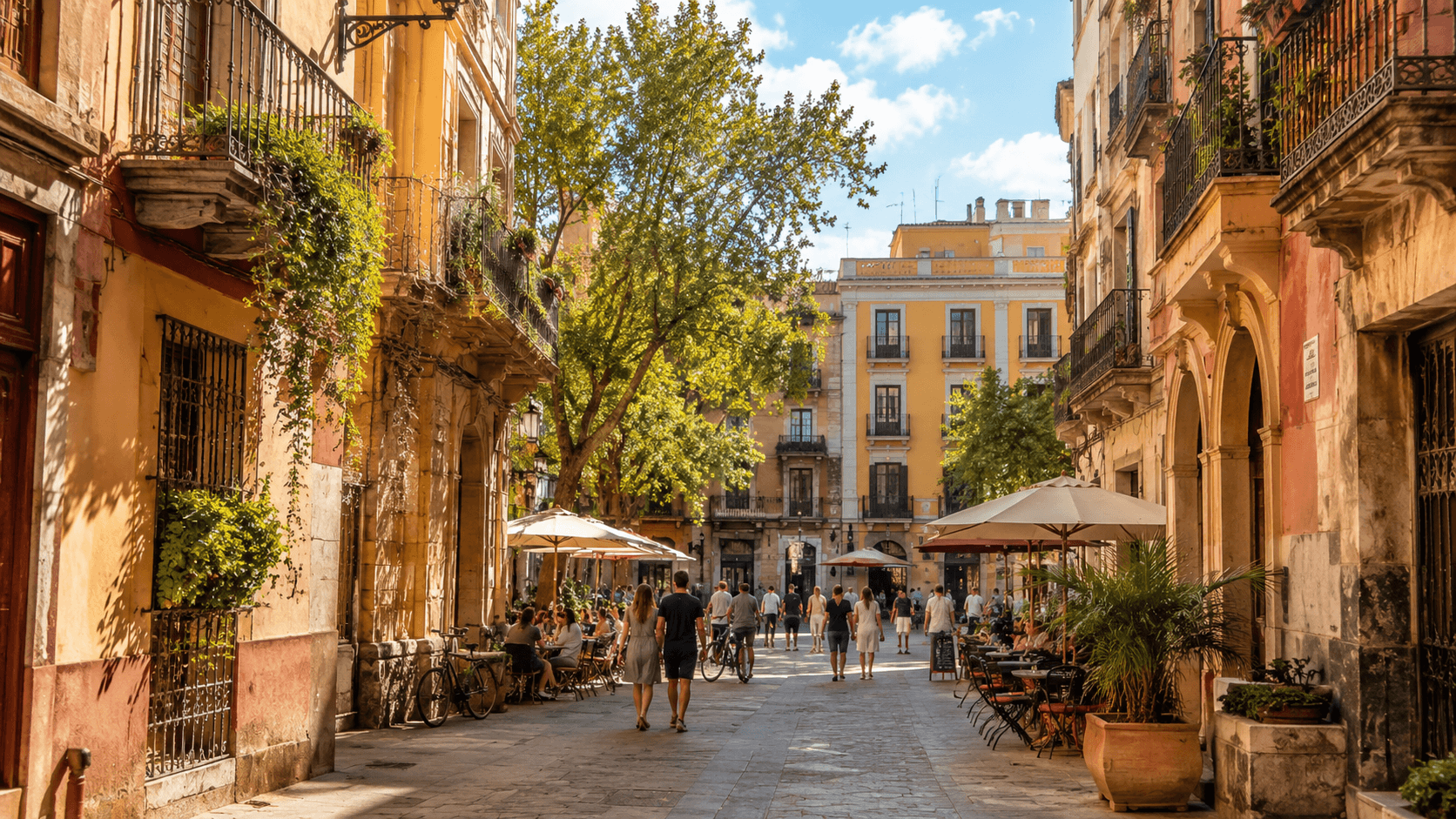
 Spain Neighbourhoods
Spain welcomes over eighty million visitors every year, drawing crowds to its spirited urban centers, historic streets, and sun-drenched coastlines. Settling on the right home base makes all the difference. Mapping out the Best Neighbourhoods to Explore in Spain’s Popular Cities before booking your trip ensures a deeper connection to the local culture.
Picking the proper district shapes your entire travel experience. Tracking down the Best Neighbourhoods to Explore in Spain’s Popular Cities lets you experience local life beyond the tourist traps. A good base camp turns a standard holiday into a deeply personal adventure.
Best Madrid Districts: Historic and Trendy Areas
Madrid serves as a spectacular starting point when mapping out the Best Neighbourhoods to Explore in Spain’s Popular Cities. The busy hub of Sol marks the symbolic center of the country’s road network, while nearby barrios offer completely distinct personalities. You can walk from medieval plazas to hipster hangouts in mere minutes.
Malasaña rules as the local hub of counterculture, packed with retro clothing shops, indie bookstores, and buzzing plazas. This zone played a major part in the artistic movement known as La Movida Madrileña during the late twentieth century. It still retains its gritty, creative edge today.
Right next door, Chueca is known for its welcoming streets, chic boutiques, and superb food scene. Hungry travelers can sample local bites at the Mercado de San Antón, which boasts a rooftop terrace looking out over the tiled roofs. It is a perfect spot for sunset drinks.
La Latina features winding medieval lanes and historic squares that pack out during the Sunday El Rastro flea market. This area is legendary for its dense concentration of traditional taverns serving classic Castilian dishes. It is the place to be for a lazy Sunday crawl.
- Malasaña provides a bohemian atmosphere with retro shops and local coffee houses.
- Chueca delivers an energetic nightlife scene alongside modern art galleries.
- La Latina hosts the historic Sunday market and traditional tapas taverns.
Where to Stay in Barcelona: Modernist and Gothic Quarters
Barcelona presents a sharp contrast between medieval lanes and grand modernist avenues, making it a key stop when researching the Best Neighbourhoods to Explore in Spain’s Popular Cities. The Gothic Quarter, or Barri Gòtic, contains stone buildings dating back to Roman times. You can still spot remnants of the ancient city walls hidden in quiet corners.
El Born sits right next to the Gothic Quarter, showing off a stylish energy with craft shops, cocktail bars, and the famous Picasso Museum. The tree-lined Passeig del Born serves as a social strip for locals and travelers alike. It feels fashionable yet relaxed.
Eixample offers a massive change of pace with its neat grid pattern laid out in the nineteenth century. This upscale district hosts famous structures by Antoni Gaudí, including the towering Sagrada Família Basilica and Casa Batlló. The wide streets feel grand and airy.
Gràcia feels like a self-contained village hidden inside the big city, defined by low buildings and sleepy squares. It remains largely free of heavy tourist crowds, giving you a taste of real Catalan life. Locals gather here to chat in the open air.
- Gothic Quarter features historic cathedral plazas and winding alleyways.
- Eixample showcases modernist architecture and high-end shopping avenues.
- Gràcia offers a bohemian village feel with independent community squares.
Seville’s Top Districts: Romance and Flamenco Culture
For history lovers, Seville holds some of the Best Neighbourhoods to Explore in Spain’s Popular Cities, serving as the romantic heart of Andalusia. The Santa Cruz district, once the Jewish Quarter, features whitewashed homes, squares lined with orange trees, and hidden courtyards. The scent of orange blossoms fills the air in spring.
Triana sits across the Guadalquivir River, historically famous for its hand-painted ceramic tiles and deep flamenco roots. The Mercado de Triana offers fresh local produce, local cheeses, and classic Andalusian bites right by the water. It has a proud, independent identity.
El Arenal hugs the opposite bank of the river, housing the historic Maestranza bullring and the golden Torre del Oro watchtower. This neighborhood reflects the glory days when Seville led maritime trade with the Americas. It is a scenic area for an evening walk.
- Santa Cruz contains the grand Seville Cathedral and the royal Alcázar palace complex.
- Triana features traditional ceramic workshops and authentic riverside flamenco venues.
- El Arenal offers historic maritime monuments and traditional Andalusian tavern dining.
Valencia’s Top Districts: Modern and Ancient Quarters
Coastal spots like Valencia mix futuristic designs with historic quarters, expanding your list of the Best Neighbourhoods to Explore in Spain’s Popular Cities. El Carmen forms the core of the old town, showing off ancient Roman and Arabic stone walls next to bold street art. It is a striking mix of old and new.
Ruzafa has shifted from a working-class hub into a very trendy district, loved for its varied dining scene and creative studios. The local Ruzafa Market provides a look at daily neighborhood life and fresh food shopping. It is a favorite among artists.
The beachside area of El Cabanyal features historic fishermen’s homes decorated with bright ceramic tiles. This coastal strip offers easy access to wide Mediterranean beaches and excellent seafood taverns. The sea breeze makes it feel worlds away from the city center.
Malaga’s Best Neighborhoods: Coastal Charm and Modern Art
Southern coastal hubs like Malaga provide a sunny alternative, highlighting the varied options among the Best Neighbourhoods to Explore in Spain’s Popular Cities. Soho serves as the designated arts district, featuring massive murals painted by international street artists and modern creative spots. It has an edgy, industrial feel.
The Historic Centre holds major archaeological ruins, including the Roman Theatre and the Moorish Alcazaba fortress. Visitors can stroll along marble-paved pedestrian streets to discover traditional taverns serving local sweet wine. It feels like stepping back in time.
Pedregalejo lies east of the main center, operating as an old fishing village known for its beachfront walkway. This area is the prime spot to try espetos, which are fresh sardines skewered and roasted over open wood fires on the sand. It is a relaxed escape from the urban core.
Summary of Top Spanish Districts
To help plan your route, here is a quick guide to the top districts in these cities, highlighting their unique charm and standout features.
| City | Top District | Best For | Key Highlight |
|---|---|---|---|
| Madrid | Malasaña | Bohemian Culture | Vintage shops and lively plazas |
| Barcelona | Eixample | Architecture | Gaudí masterpieces and shopping |
| Seville | Santa Cruz | History | Seville Cathedral and Alcázar |
| Valencia | El Carmen | History and Art | Roman walls and colorful street art |
| Malaga | Soho | Modern Art | Street murals and creative spaces |
Key Takeaways for Your Spanish Adventure
Building your travel route around the Best Neighbourhoods to Explore in Spain’s Popular Cities guarantees a culturally rich trip. Each district offers a clear window into regional traditions, architectural marvels, and food specialties. No two areas feel exactly the same.
Look for places to stay that match your preferred daily pace, whether you want a bustling central street or a quiet residential pocket. Try to walk as much as possible to discover hidden alleyways and local plazas that cars cannot reach. Walking is the best way to stumble upon local secrets.
Respect local customs, including the afternoon siesta hours and late-night dining schedules, to blend into the Spanish way of life. Taking the time to understand how these neighborhoods tick ensures a memorable and deep trip through Spain. You will leave with a much richer appreciation for the country.


Comments are closed